
Good Housekeeping
How to Make Your Food Pantry Donations Actually Helpful
Plus, the type of food that's most scarce, but crucial to healthy diets.
Published: Nov 09, 2025 6:11 AM EST
SNAP (Supplemental Nutrition Assistance Program) is under fire, thanks to the ongoing federal government shutdown. Though the administration will be restoring more benefits than originally threatened, assistance could be less than 65% then typical amounts.
Now, food pantries are feeling the pressure of taking on the rising needs. Add in astronomical grocery prices, and the country’s food-aid safety net is fraying fast.
For those looking to help, every donation counts—but what you choose to give matters a lot. Many recipients don’t have access to full kitchens, refrigerators, or extra ingredients, meaning that some boxed or canned items simply can’t be used.
A few smart swaps—like choosing a boxed mac and cheese that doesn’t require milk or butter—can make your gift immediately more useful to the people who need it most. Here, a closer look at the biggest things you need to consider when donating food.
First, know the difference between a food bank and food pantry
“Pantries and banks are not all the same,” says Liz Frank, vice president of operations for Vinegar Hill Food Pantry in Brooklyn. “Banks are larger and can warehouse food items for pantries, but they often face considerable financial overhead. Pantries are local and sometimes run on a shoestring budget, relying on volunteer involvement. Therefore, researching where you are sending your items or funds and how those organizations engage with their communities is crucial.”
The one biggest thing: fewer ingredients, more impact
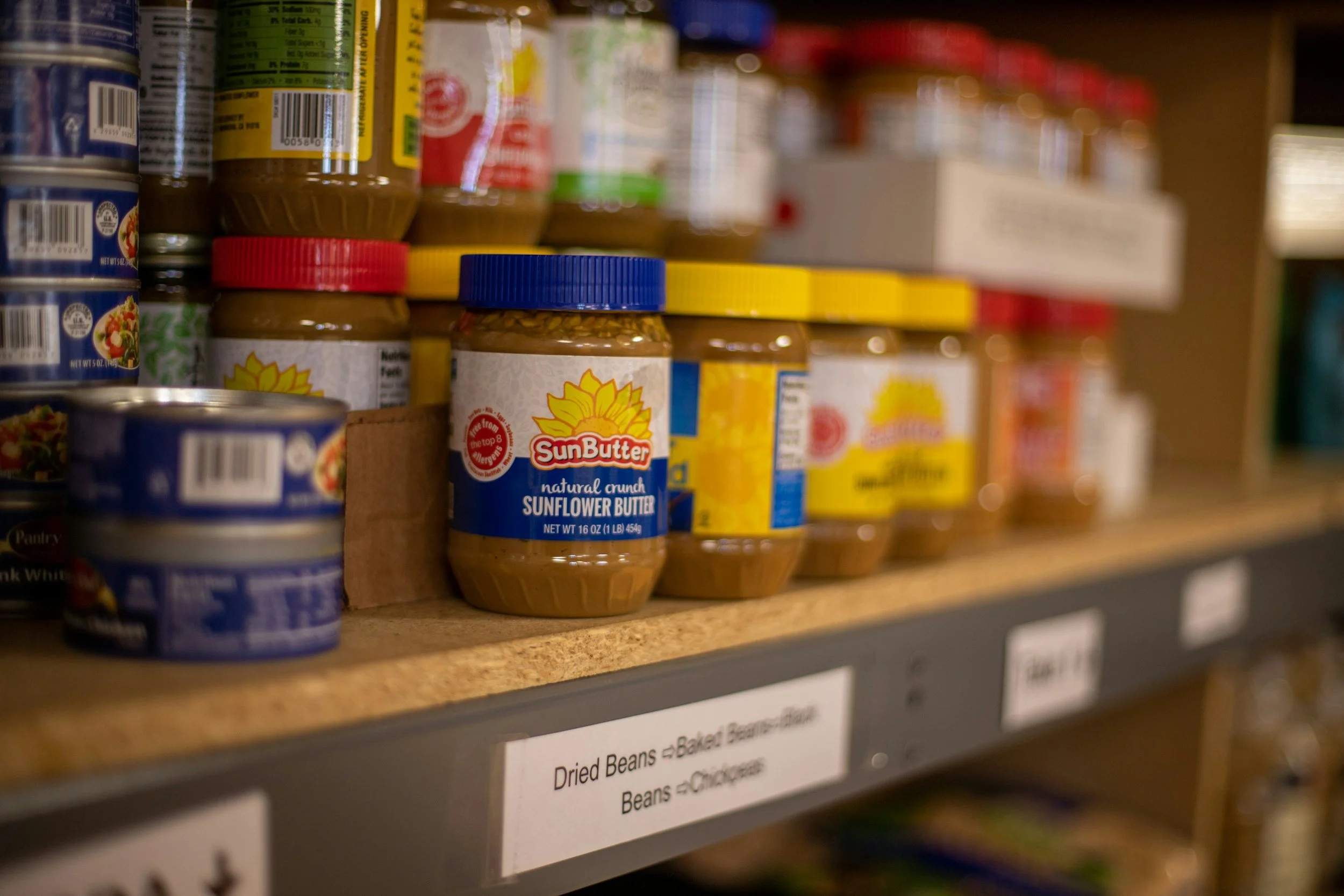
One of the easiest ways to make a donation more useful is to choose items that require fewer added ingredients or equipment to prepare. For example, a box of mac and cheese that calls for milk and butter is not as useful as those with cheese sauce. With the latter, all the recipient needs is boiling water. “It’s important to realize that many folks have limited kitchen supplies, if they have a kitchen at all,” says Frank. “For example, some folks do not have can openers, so cans with pull tabs are beneficial. Cooking oils and spices are luxuries, so consider donating them.”
“Carbs are plentiful, but proteins such as tuna, peanut butter, jerky, or chickpea snacks are great,” she adds. “Additionally, snacks that travel well are dried fruit and protein bars.”
“We always need protein foods such as canned tuna or canned chicken,” echoes Diana Galer Jaffe, a longtime volunteer at Interfaith Food Pantry of the Oranges in New Jersey. “Another need might be UHT milk [Ultra High-Temp Milk, aka shelf-stable liquid milk] rather than powdered but that may create storage problems.”
What food to donate—and what to skip
Food bank representatives say that shelf-stable, ready-to-eat items are the safest bet. “We have found that fresh items and non-perishables are readily available via donation, but protein in any form is scarce,” says Frank. “Donate cans of tuna, chicken, or sardines, and you’d get a gold star from us!”
Some donations, while thoughtful, actually go to waste. “I think people think they can donate expired food. That is not good,” says Galer Jaffe. “We strive to treat all our neighbors with dignity and respect.” At her food pantry, make-and-go items such as microwavable meals or canned soups are great for older kids who can make these with little supervision.
And while there’s been social media buzz around donating cake mixes and frosting to help families celebrate birthdays, most pantries have other priorities. “Our clients aren’t asking for cake mixes and icing as much; however, we do pass these items along through our Free Red Library Box, which serves food instead of books,” says Frank. “People need nutrient-dense proteins, fruits, and vegetables.”
The focus is on healthy food items at the Los Angeles Regional Food Bank, as well, says David May, senior director of marketing. “For shelf-stable, these items might include: Peanut and other nut butters, crackers, peanut butter crackers, cheese crackers, trail mix, fruit snacks, energy bars, pop top tuna, pop top chicken, 100% juice boxes, raisins and other dried fruit, UHT milk, and individual cereal boxes.”
May also cautions against altering packaging, or writing notes for those collecting. “We’d want the original packaging, ‘best-by’ dates, and nutrition info to be easily readable,” he says.
Remember, money still matters
All three experts agree: Monetary donations are often the most efficient way to help. “Money is best for organizations like ours because we have very little overhead, financial support goes directly to food for our neighbors," says Frank.
Cash contributions also help food banks manage logistics, adds May. “Food banks are happy to accept food donations of any kind, including small ones, but something people often forget is that food banks receive semi-trucks full of food each day,” he says. “What we really need is funds to help store and transport already donated food items.”
Small actions make a big difference
Even small gestures matter, says Frank. “Finding your local bank or pantry is a great way to strengthen your community and help meet needs directly around you," she says. "Grassroots is so essential right now—and don’t think it has to be some grand gesture. A five-dollar donation and or a couple of cans in a donation box at your local library—these are all great and accessible steps.”
Or, as May puts it: “A virtual food drive is the way to go if you ask me! Again, we'll take food donations, and everything helps.”
Freelance Writer
Samantha Leal is a writer, editor, and content strategist whose work centers around all things lifestyle—beauty, fashion, drinks, food, travel, and wellness (to name a few). Basically, all the good things in life. She holds a journalism degree from the Medill School of Journalism at Northwestern University, and has held roles at Well+Good, Marie Claire, Latina magazine, and The Knot. Her byline has appeared in Refinery29, Glamour, Teen Vogue, Apartment Therapy, and more.
Growing a Good Idea: The Vinegar Hill Food Pantry
As the 2020 pandemic disrupted daily life across Brooklyn, one of the most immediate challenges for residents was consistent access to food. Grocery shelves were unreliable, mobility was restricted, and existing support systems were slow to meet the scale of need.
“Like a lot of people, I wanted to help but I didn’t know where to start—I was worried about it not being enough or not feeling meaningful,” says Vinegar Hill resident Jennifer Macksoud. “Putting some cans in the box everyday made me feel like I was doing something helpful, and since we were home all the time, I could see how often that box needed to be refilled.“
As word spread, volunteers and nearby businesses joined in and this grassroots effort eventually became the Vinegar Hill Food Pantry, now a registered nonprofit run by a dedicated volunteer team.
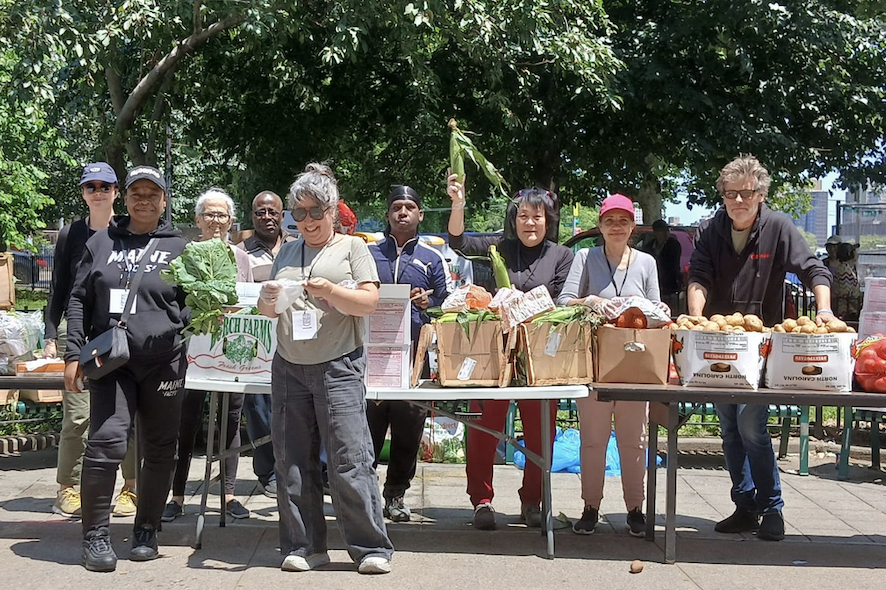
Today, the pantry operates two primary programs, a weekly food distribution and an outdoor pantry located by the community garden, stocked with no-cost essentials for immediate, anonymous access.
“[Every Tuesday] we start handing out numbered tickets at 9:30AM [and] a little before 12PM we [begin] handing out allotments,” says Elizabeth Frank, volunteer and VHFP’s Director of Operations. “Our clients live close by and are low-income folks. We have many elderly clients as well as young people with families.”
The model is intentionally simple: reduce food insecurity by offering reliable, barrier-free support. As a volunteer-driven organization, the pantry maintains a strong neighborhood focus while leveraging its nonprofit status to secure donations and grants that sustain its work.
“The food comes mainly from grant funding from the Community Food Connection and from private donations to VHFP. Also, once a month, the pantry receives food items from The Campaign Against Hunger,” says Frank. Neighbors can also easily get involved.
“[You can leave] shelf-stable items like pasta, vegetables, fruit, beans, protein, soups, etc., in the Little red box located outside Vinegar Hill Community Garden on Gold Street any time, and you can also donate online. Five dollars goes a long way!”
You can also become a weekly volunteer by showing up at 228 York Street at 11:30AM any Tuesday of the year to help with the distribution. “People can organize food drives within their buildings or schools to benefit the pantry as well,” says Frank.
Ideas? Questions? Email VHFP to get more involved.
Elisa from DUMBO ACTION COMMITTEE Newsletter
December 17, 2025